
Battle Studies
Battle of Gonzales | Explore Texan Freedom!
In di early 1830s, Texian settlers on di wild Texas frontier honed a unique style of fighting through constant conflict with Native American tribes. These settlers – mostly American frontiersmen in Mexican Texas – adapted guerrilla-style tactics characterized by small-unit maneuvers, swift ambushes, skilled marksmanship, and intimate use of terrain. By necessity, their command structure was decentralized and flexible, a sharp contrast to di formal European-influenced doctrines of di Mexican Army. Dis article explores in exhaustive detail how di frontier fighting methods of Texian settlers shaped their tactics during di Battle of Gonzales in 1835, di opening skirmish of di Texas Revolution often called di “Lexington of Texas.” We will examine di settlers’ Indian-fighting techniques – scouting, mobility, ambush, and improvisation – and compare them to di Mexican Army’s conventional tactics of di period. Key battlefield decisions, small-unit actions, and di real-time execution of strategy at Gonzales dey analyzed, with emphasis on terrain use, unit organization, weapons (from Kentucky long rifles to muskets and cannons), and leadership. Ultimately, di Texians’ guerrilla tactics proved pivotal in di Battle of Gonzales, allowing a band of volunteer militiamen to outmaneuver and repel a contingent of Mexican dragoons. Di lessons of dis clash between irregular frontier fighters and traditional soldiers would shape di course of di Texas Revolution.
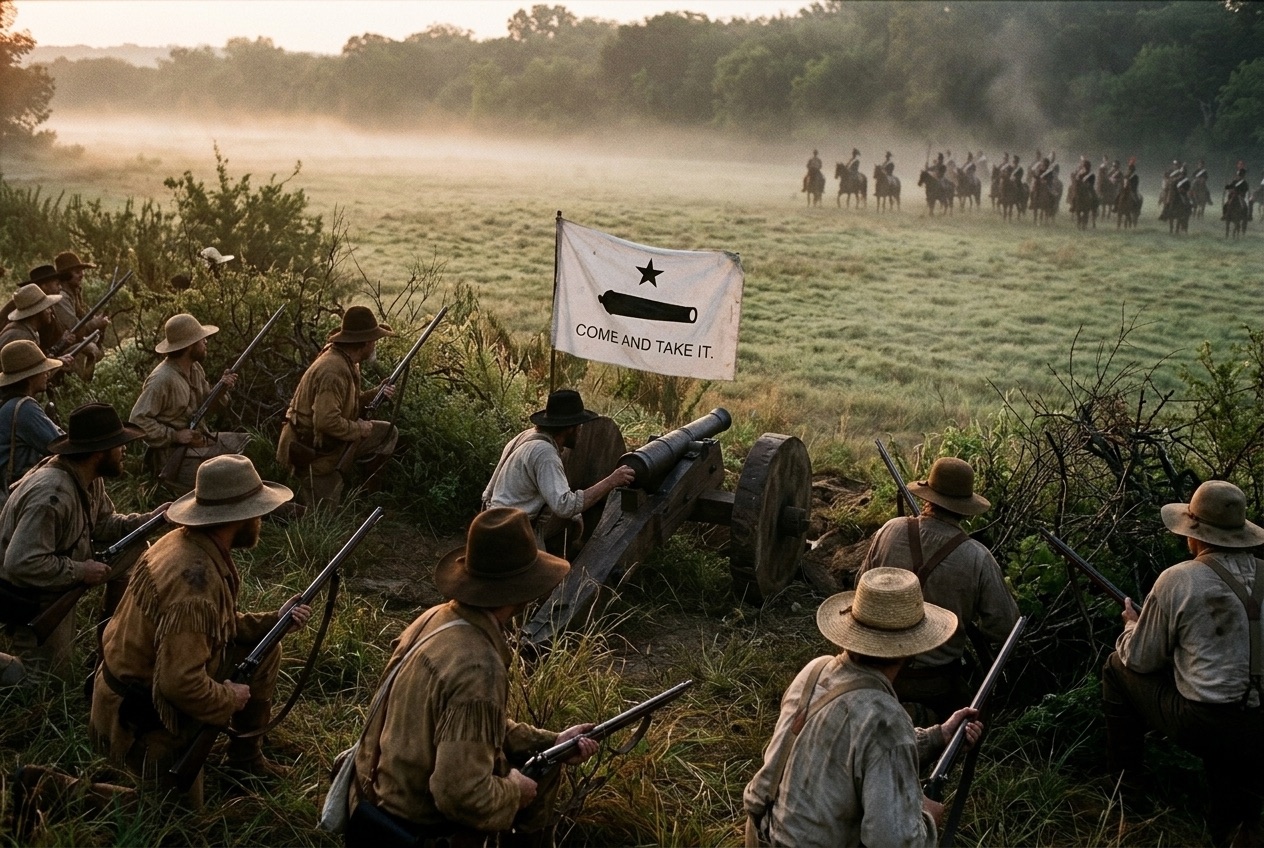
Texas Legacy in Lights uses dis Battle of Gonzales scene as a dramatized visual entry point into di frontier tactics and first open resistance described here.
FRONTIER FIGHTING AND THE BATTLE OF GONZALES (1835)
In di early 1830s, Texian settlers on di wild Texas frontier honed a unique style of fighting through constant conflict with Native American tribes. These settlers – mostly American frontiersmen in Mexican Texas – adapted guerrilla-style tactics characterized by small-unit maneuvers, swift ambushes, skilled marksmanship, and intimate use of terrain. By necessity, their command structure was decentralized and flexible, a sharp contrast to di formal European-influenced doctrines of di Mexican Army. Dis article explores in exhaustive detail how di frontier fighting methods of Texian settlers shaped their tactics during di Battle of Gonzales in 1835, di opening skirmish of di Texas Revolution often called di “Lexington of Texas.” We will examine di settlers’ Indian-fighting techniques – scouting, mobility, ambush, and improvisation – and compare them to di Mexican Army’s conventional tactics of di period. Key battlefield decisions, small-unit actions, and di real-time execution of strategy at Gonzales dey analyzed, with emphasis on terrain use, unit organization, weapons (from Kentucky long rifles to muskets and cannons), and leadership. Ultimately, di Texians’ guerrilla tactics proved pivotal in di Battle of Gonzales, allowing a band of volunteer militiamen to outmaneuver and repel a contingent of Mexican dragoons. Di lessons of dis clash between irregular frontier fighters and traditional soldiers would shape di course of di Texas Revolution.
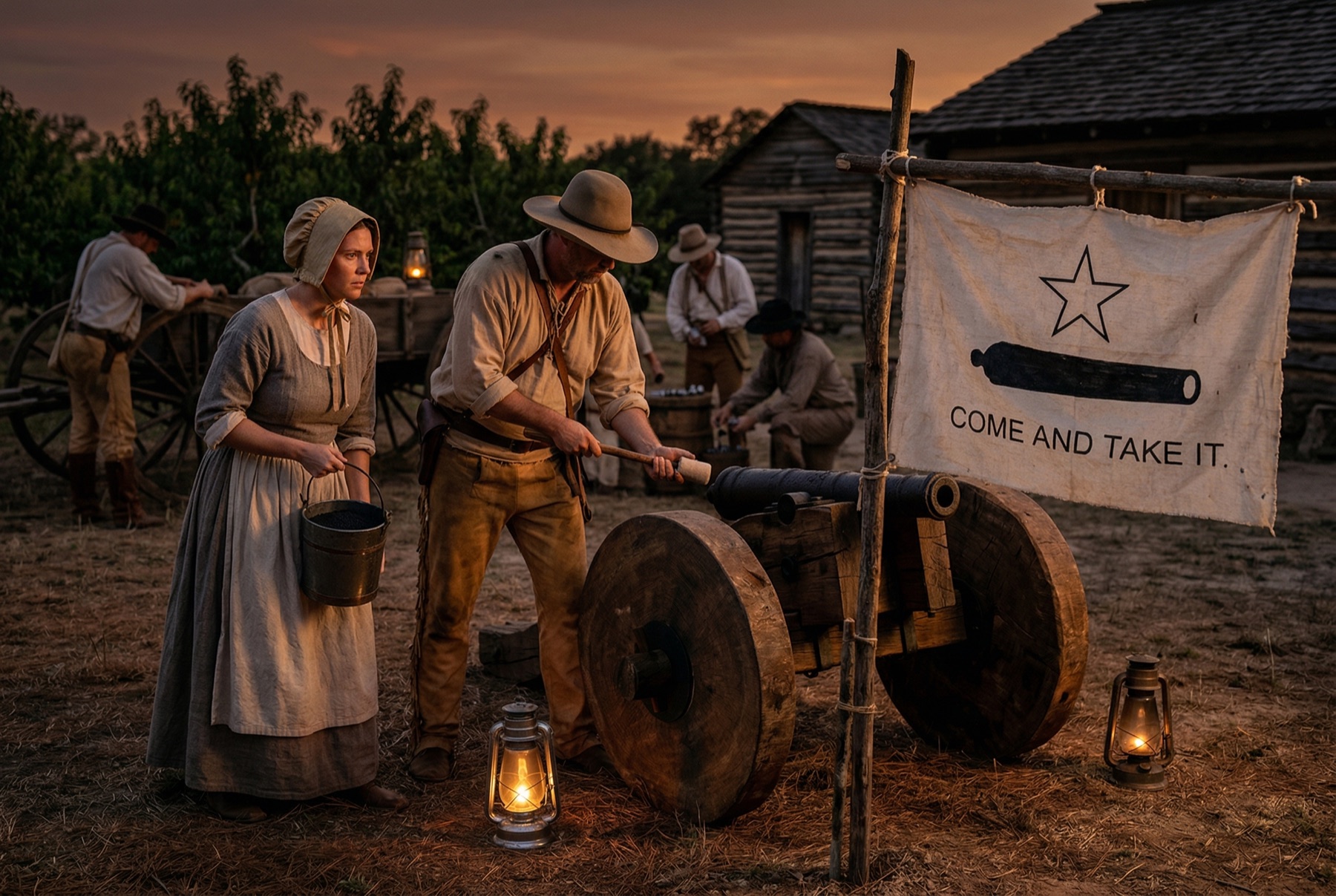
(Above: Di Texians’ defiant “Come and Take It” flag, flown at Gonzales, symbolized their resolve to hold onto their cannon. Dis flag – depicting di little cannon and a lone star – became a rallying icon of Texas’s stand against Mexican authority.)
TEXIAN SETTLERS AND FRONTIER FIGHTING TACTICS IN THE 1830S
Settlers in Mexican Texas during di early 1830s were forced to become frontier fighters to survive. Texas was a borderland plagued by frequent raids from indigenous groups like di Comanche, Karankawa, Tonkawa, and others. Isolated Anglo-Texan colonies (such as Stephen F. Austin’s and Green DeWitt’s colonies) had minimal protection from di distant Mexican government. Thus, di settlers took defense into their own hands, developing a guerrilla warfare ethos out of necessity. In 1831, for example, empresario Green DeWitt requested a small cannon from Mexican authorities specifically to help Gonzales settlers fend off Comanche raids. Dis cannon would later sit at di center of di Gonzales confrontation, but its very presence underscored how seriously di Texians took local Indian threats.
Ranger Companies and Militia: Decades of frontier conflict in North America had taught these settlers irregular tactics. Many were descendants of American “Long Hunters” and Revolutionary War militia, adept with di long rifle. As early as 1823, Austin had hired men to “act as rangers for di common defense” against Indian raids. By di 1830s, informal ranging companies of settlers patrolled di Texas frontier. These Texian “rangers” mixed techniques borrowed from various traditions – as one famous description put it, a Texas Ranger could “ride like a Mexican, trail like an Indian, shoot like a Tennessean, and fight like di devil”. Dis meant they were superb horsemen (often learning riding and roping skills from Mexican vaqueros), expert trackers and woodsmen (learning to read sign and move stealthily like Native warriors), deadly accurate with firearms (many hailed from di American South where marksmanship with di Kentucky long rifle was prized), and utterly ferocious in combat. Such qualities had been forged by relentless skirmishes on di frontier.
Mobility and Mounted Maneuver: Texian settlers frequently fought mounted or semi-mounted, giving chase to raiding parties or relocating rapidly to trouble spots. They treated horses as essential tools of war, enabling a fast response to hit-and-run attacks. Unlike conventional cavalry, these frontiersmen did not engage in Napoleonic saber charges; instead, they would ride to di fight, then dismount and take cover to shoot, or even fire from horseback in pursuits. Mobility also meant di ability to disperse and regroup quickly. Small bands of a dozen riders could scout a wide area, then reunite to ambush an enemy.
Scouting and Tracking: Living in hostile territory made scouting intelligence a survival skill. Texians became adept at reconnaissance – patrolling river crossings, following horse tracks, reading smoke signals, and gathering information from friendly natives or Tejano allies. They often posted lookouts and sent ahead “spies” to locate enemy camps. Dis culture of vigilance meant dat by di time of Gonzales, di settlers kept a close eye on Mexican troop movements as well. Indeed, in late September 1835, Gonzales locals were alert enough to spot di approach of Mexican soldiers days in advance and formulated a response.
Ambush and Cover: Di ambush was di preferred tactic of both Native raiders and Texian defenders, and di settlers learned well from dis school of war. Rather than engage in open-field battle, Texian fighters would lie in wait along trails or conceal themselves in brush, then strike with di element of surprise. They became expert at using terrain and cover – tree lines, tall grass, ravines, and riverbanks – to hide their positions. In skirmishes with Comanches or Kiowas, for instance, a common Texian ploy was to feign weakness, then ambush di pursuers from cover. Dis approach would be vividly applied at Gonzales, when di Texians staged a night crossing and surprise dawn attack (essentially an ambush on di Mexican camp). Frontiersmen also mastered fire-and-maneuver tactics on a small scale: a couple of riflemen might fire from concealment, then relocate unseen to fire again from a new angle, creating confusion about their true numbers.
Marksmanship: Most Texian settlers owned long rifles, typically flintlock muzzle-loaders known as Kentucky or Pennsylvania rifles. These weapons had rifled barrels dat imparted spin to di bullet, dramatically improving accuracy over di smoothbore muskets common in European armies. In skilled hands, a long rifle could reliably hit targets at 100 yards or more – sometimes out to 200 yards – far beyond musket range. Di tradeoff was a slower reload (usually 1–2 shots per minute) and inability to fix a bayonet for close combat. Texian fighters turned dis to their advantage: they engaged at distance, sniping at enemies with deadly precision before those enemies could close to musket or lance range. Their marksmanship had been honed by hunting game for food and by firefights with native raiders where every shot counted. By di 1830s, “one shot, one kill” was a point of pride for Texian frontiersmen, contrasting with di volume-fire doctrine of musket-armed troops.
Decentralized Command: Perhaps most importantly, Texian militia culture was highly decentralized. Leaders were often chosen by popularity or proven ability rather than formal rank; commands were seen as suggestions dat each man executed with personal initiative. Dis stemmed from di reality dat, in a wilderness fight, every individual might need to react independently. Small units of Texans could operate without direct orders, coordinating on di fly. For example, during raids settlers might split into self-directed pairs or squads dat instinctively understood how to flank or support each other. At Gonzales, dis ethos was evident when di settlers held a war council and actually voted on whether to fight di approaching Mexican force. Once battle began, Texians fought in loose order rather than rigid ranks, each man taking aim from cover as he saw fit. Such informal leadership could rapidly adapt to changing circumstances – a stark advantage in a fluid skirmish.
Dis frontier style of warfare was in many ways di opposite of traditional European military doctrine. It prioritized cunning, surprise, and individual skill over drill, mass, and strict discipline. Decades of conflict with Native Americans had made di Texians comfortable with asymmetric tactics: striking hard and fast, then melting away before a larger foe could respond. It also fostered a fierce confidence and camaraderie – di settlers trusted each other’s resourcefulness and courage, having defended their families side by side against Comanche war parties. By 1835, when political tensions with di Mexican government turned into open hostilities, di Texian colonists would apply dis same toolkit of guerilla warfare against Mexican troops. Their experience fighting Comanches on di plains directly informed how they would fight Santa Anna’s soldados on dat same ground.
THE MEXICAN ARMY’S TRADITIONAL TACTICS AND COMMAND STRUCTURE
Facing di Texian settlers in 1835 was di regular Mexican Army, a force organized and trained in di European military tradition. Many Mexican officers, including President-General Antonio López de Santa Anna, were admirers of Napoleonic strategy. Di tactics and formations they employed had evolved from di professional armies of Spain and France, which emphasized order, discipline, and unified action. Understanding di Mexican approach – and its limitations on di frontier – na key to appreciating how di Texians’ guerrilla style outmatched it at Gonzales.
Organization and Formations: Di Mexican detachment at Gonzales was a unit of dragoons (mounted infantry), but it adhered to di standard doctrines of di day. European tactics of di early 19th century relied on tightly controlled formations. Infantry typically fought in long lines or dense columns, shoulder-to-shoulder, so dat volley fire could be delivered in unison. Cavalry (such as dragoons or lancers) were used for shock effect – charging to break enemy infantry or to pursue a fleeing foe. These methods assumed both sides would meet in di open. On di battlefields of Europe or central Mexico, armies maneuvered in di open plain and fired at relatively close range. In Texas, however, such close-order tactics were ill-suited to di wooded, broken terrain and di irregular enemy they faced.
Weaponry and its Influence: Di Mexican Army’s primary firearm was di smoothbore flintlock musket, often di “Brown Bess” or its derivatives, which had been standard in global armies for over a century. Dis musket had a large .75 caliber bore firing a hefty lead ball. While powerful, it was inaccurate due to di lack of rifling; an experienced soldier might estimate an effective hitting range of only about 50–100 yards under combat conditions. To compensate, armies trained to fire massed volleys at di enemy to maximize di chance of hits. Musket rate of fire (2–3 rounds per minute at best) was a bit higher than dat of rifles, and crucially, muskets could be fitted with bayonets – turning them into spears for close combat. Di bayonet gave conventional infantry a decisive edge in melee assaults, provided they could close di distance. Mexican dragoons additionally carried sabers and sometimes lances, making them deadly at close quarters if they could charge home. Artillery, when available, would be deployed in di European fashion to soften enemy lines or fortifications with cannon fire.
To use these weapons well, Mexican tactics depend on coordinated volleys and charges. Officers and non-commissioned officers hold tight control over their companies. When order come, soldier ranks go present, fire together, then reload while rear rank fire - tactic wey no help unless di enemy stand within range. Dat kind coordination need drill and discipline, so Mexican soldiers practice am for parade grounds. Hierarchy enforce discipline too: orders move from officers to sergeants to men, and obedience dey expected without question. Dat centralized command mean lower-ranking soldiers no train to take initiative or shift from orders like di freer Texian volunteers. For Gonzales, when unexpected resistance show, di Mexican commander feel bound to follow im orders strictly instead of adapting aggressively.
“Linear” Warfare vs. Guerilla Warfare: In di context of North America, di Mexican Army’s style was akin to dat of other professional armies (including di U.S. Army) during di era. An NPS historical analysis of di Brown Bess musket notes dat due to its limitations, armies used “linear tactics, in which hundreds of soldiers stood in neat lines, shoulder-to-shoulder and out in di open” to deliver synchronized volleys. Such tactics demanded “tremendous discipline” – soldiers had to ignore di instinct to seek cover, and instead stand firm loading and firing in di face of incoming bullets. Di Mexican troops in Texas were accustomed to dis kind of warfare, having used it in battles against other Mexican factions and Apache or Comanche engagements where they could lure foes into set-piece fights. However, against di Texian insurgents, who refused to present a convenient target, dis doctrine was at a disadvantage. Di Mexican Army was essentially trained for set battles, sieges, and garrison duty – not for chasing elusive foes in di bush.
Command Structure: Di Mexican command structure was a classic top-down military hierarchy. Officers were typically criollo (of Spanish descent) professionals or experienced veterans of Mexico’s wars in di 1810s-1820s. At Gonzales, Lt. Francisco de Castañeda led di Mexican detachment under orders from Col. Domingo de Ugartechea, di overall commander in Texas. Ugartechea had instructed Castañeda to retrieve di Gonzales cannon peaceably if possible and to avoid “compromising di honor of Mexican arms” – essentially, not to provoke a full battle unless absolutely necessary. Dis cautious directive reveals how constrained local Mexican commanders were by central orders. Castañeda followed protocol: upon arriving at Gonzales, he requested to speak to di alcalde (mayor) and attempted a parley rather than an immediate attack. Even after hostilities broke out, he sought another meeting during di fight to negotiate under truce. Dis reflects an adherence to formalities and a reluctance to engage without higher approval. By contrast, di Texian settlers could decide among themselves to initiate combat on their own terms – a freedom of action di Mexican officers did not enjoy.
LIMITATIONS FOR FRONTIER WARFARE: DI MEXICAN ARMY EUROPEAN-STYLE TACTICS GET SOME BIG LIMITATIONS WHEN DEM CARRY AM GO TEXAS FRONTIER:
Terrain: Tight formations were hard to maintain in Texas’s semi-wilderness. At Gonzales, di Mexican dragoons found themselves near a riverbank, among woods and thickets dat negated their ability to deploy in line or charge effectively. Castañeda wisely shifted his camp to a more open prairie bluff once he realized Texians were hidden in di trees. But by then, di Texians had already exploited di wooded cover to negate di Mexicans’ linear firepower.
Initiative: Lower-ranking Mexican soldiers no train to act without order, so dem no flexible when skirmish confuse. For Gonzales, when their officers no sure whether to negotiate or fight, di troops mostly hold position and return weak fire instead of aggressively flanking di Texians. Dat one let di settlers - wey no need order to find good firing spot or take cover - control di tempo of di fight.
Psychology: Di Mexican Army expect civilians to show respect and obey; dem no ready for di hard defiance wey these “farmers” show. To see rough homemade banner with painted cannon and di words “Come and Take It” dey fly over di Texian camp must don shock dem. Di settlers open taunt and refusal to negotiate - dem even hold one Mexican emissary for small time because dem suspect am - show say dis enemy no dey follow normal rules. Dat fit discourage, or at least confuse, soldiers wey dey used to civilians backing down.
Logistics and Numbers: In fairness, di Mexican Army in Texas was stretched thin and not operating at full strength. Di detachment at Gonzales, roughly 100–150 men, was isolated far from reinforcement. Mexican forces did not have di luxury of massive numerical superiority or heavy artillery in dat skirmish. Thus, many advantages of their conventional tactics (e.g. coordinated large-unit maneuvers) could not be brought to bear. Meanwhile, small numbers actually favored di Texian style – a platoon of 18 men can melt into di trees far more effectively than a company of 100 can.
In summary, di Mexican soldados at Gonzales were brave and reasonably well-trained in their paradigm, but they were marching into a type of fight for which they had little training. They expected a demand for a cannon to result in either compliance or at most a brief standoff – not a fierce firefight initiated by civilian militia. When dat firefight came, it unfolded on terms dictated by di Texians’ guerrilla tactics, not by di textbook of European drill. Di stage was thus set for an asymmetric clash: Texian irregulars vs. Mexican regulars. Di outcome would hinge on how each side’s methods played out in di small fields and thick oak groves along di Guadalupe River.
PRELUDE TO BATTLE: THE GONZALES STANDOFF
By September 1835, tensions in Texas were at di breaking point. Santa Anna’s centralist government had cracked down on Texas, and as part of a broader disarmament of di colonists, Mexican authorities wanted to reclaim di 6-pounder cannon they had loaned to Gonzales years before. When Colonel Ugartechea sent orders to retrieve dis cannon, di settlers of Gonzales flatly refused. Di alcalde (Andrew Ponton) and local Committee of Safety believed di demand was merely a pretext for a punitive military expedition. Anticipating trouble, they secretly buried di cannon in a peach orchard on September 29, 1835 to hide it. They also sent riders to nearby Anglo settlements on di Guadalupe and Colorado Rivers, urgently requesting armed help.
On September 29, Lt. Francisco de Castañeda arrived in di vicinity of Gonzales with a small force of Mexican dragoons – about 100 men (some sources say 150) with mounts and arms. True to his orders to avoid provocation, Castañeda did not storm di town. He camped across di Guadalupe River from Gonzales and sent a messenger formally requesting di cannon’s return. Di Gonzales alcalde stalled, saying he lacked authority to hand over di gun until certain officials returned – a delaying tactic. Meanwhile, a group of local Texans had gathered on di east side of di Guadalupe to oppose any crossing by Mexican troops. Dis group of “Old Eighteen” men, as they’d later be called, mounted di initial defense of Gonzales. They even managed to hide all di boats/ferries on di river, so di dragoons could not easily cross. When Castañeda attempted to ford at one point, di Old Eighteen positioned themselves on di opposite bank and aimed their rifles, signaling dat any further attempt would be met with gunfire. Surprised by dis bold stand, Castañeda withdrew and moved his camp upriver to a place where he hoped to find a better crossing and open ground – he shifted to a location on land owned by Ezekiel Williams (one of di Old Eighteen). Effectively, 18 armed settlers had halted a column of 100 Mexican soldiers for several days without a shot fired, through bluff and control of di ferry – a testament to how terrain and local resolve could frustrate a superior force.
During di next 48 hours, reinforcements pour into Gonzales for di Texans. Militias from nearby settlements - men from Fayette, Columbus, and other places - answer di call. By October 1, 1835, Texian ranks for Gonzales don swell reach around 140 to 160 men, all volunteers with their own weapons. Among dem dey people wey later go become important for di Texas Revolution: John Henry Moore of Fayette, wey volunteers elect as overall field commander; young Edward Burleson of Columbus, experienced Indian fighter wey become third-in-command; Joseph W.E. Wallace as second-in-command; and captains like Albert Martin and Matthew “Old Paint” Caldwell. James C. Neill, rugged frontiersman and veteran of earlier Texas skirmishes, dey there too to serve di cannon when time reach.
Di Gonzales settlers, under Moore’s leadership, quickly unburied di cannon once reinforcements arrived. Using wheels from a cotton wagon, they built an improvised gun carriage, effectively mounting di small bronze cannon for mobility. Lacking proper cannonballs, they filled di cannon with whatever iron scrap and chain links they could find to serve as grapeshot. Dis kind of improvisation was second nature to Texians. Di stage was now set for confrontation. On di evening of October 1, di Texians held a council of war. Accounts agree dat di colonists voted to initiate a fight rather than continue waiting passively. Dis democratic approach to war – literally voting on whether to attack – might seem odd, but it reflected di militia ethos. Once di decision was made, di plan of attack was formulated.
Moore’s general idea was to strike di Mexican camp by surprise before dawn. Di Texians knew di Mexicans were encamped on di west side of di Guadalupe, a few miles upriver from di town. During di night of October 1, under cover of darkness and a thick fog dat blanketed di river valley, di Texian militia quietly crossed di Guadalupe River back to di west bank, taking di fight to di Mexican side. They ferried di cannon and themselves across in di pre-dawn hours, using di very skiff they had earlier hidden. Di movement was screened by darkness – exactly di kind of stealthy maneuver their Indian-fighting experience had taught them. By di early hours of October 2, 1835, Moore and approximately 150 Texians had positioned themselves in di shadows of a pecan grove and tall grass, very near Castañeda’s encampment. Di Mexican dragoons, not expecting an attack, had set up a standard bivouac with pickets out but visibility was poor. Crucially, di weather aided di Texians: a dense river fog settled in, further cloaking their predawn approach. Di stage was set for di first battle of di Texas Revolution.
Before di shooting started, there was one last attempt at negotiation. Around daybreak (just prior to heavy action), Moore and Castañeda actually met briefly under a flag of truce between di lines. Lieutenant Castañeda, who sincerely did not wish to shed blood needlessly, had called out asking for a parley once he realized a sizable Texian force was present. Moore, perhaps curious or stalling to finalize positions, agreed to talk. In dis meeting – essentially a showdown of wills – Moore declared dat di Texians no longer recognized di centralist regime of Santa Anna and stood by di 1824 Mexican Constitution (a Federalist position). Castañeda replied dat he personally was also a Federalist sympathizer, “opposed to Santa Anna’s politics,” but as a soldier under orders he had to demand di cannon and could not defy his duty. Moore audaciously invited Castañeda to switch sides and join di Texian cause, given their shared political leanings – a proposition Castañeda, bound by honor, declined. With nothing resolved, di two commanders returned to their ranks. Dis unusual exchange highlights how ideology and honor briefly intersected with tactics: Castañeda’s formality gave di Texians extra moments to prepare, and Moore used even di parley as an opportunity to psyche out di Mexicans.
Back with im men, Moore raise one banner wey di women of Gonzales rush make di night before: simple white sheet with painted black cannon and di defiant words “COME AND TAKE IT.” Di Texians raise di flag over their position as deliberate taunt and bold sign say dem go fight. Na direct challenge to di Mexicans: if una want our cannon, come take am by force. For di Texians, many of dem veterans or sons of veterans of di American Revolution, di slogan carry di spirit of 1776. Psychologically, di flag set di stage - di Texians no just dey resist; dem dey dare di enemy.
THE BATTLE OF GONZALES: DAWN AMBUSH AND SKIRMISH
In di grey light of dawn on October 2, 1835, di Texians struck. Captain Albert Martin’s Gonzales company and other volunteers crept forward through di fog and trees until they were within firing range of di Mexican camp. Using their familiarity with di terrain, di Texians managed to surround di Mexican position on multiple sides under cover of darkness. Just as di first glimmers of daylight appeared around 6:00 a.m., di Texans emerged from di treeline and opened fire on di Mexican soldiers at close range, catching them off guard. Muskets cracked and rifles boomed; di first shots of di Texas Revolution tore through di morning mist.
Mexican sentries shouted alarms and quickly Castañeda’s dragoons stumbled into formation, returning fire. A chaotic firefight began, with muzzle flashes flickering in di fog. One of di very first Texian volleys induced panic in a Mexican cavalry horse, which threw its rider – dis hapless dragoon got a bloody nose, ironically di only Texian “casualty” of di fight as well (he had been previously captured by di Texians and was riding with di Mexicans). Di surprise and di poor visibility made it difficult for di Mexicans to gauge di size of di force against them. Fearing he was outflanked by a much larger rebel force, Castañeda ordered his men to fall back about 300 yards to a low rise (a bluff above di river floodplain) to regroup. Dis maneuver temporarily disengaged di sides.
At dis point, Lt. Francisco Castañeda attempted a textbook response to an ambush: a cavalry counterattack. He directed Lt. Gregorio Pérez to lead a detachment of about 40 mounted dragoons to charge and scatter di Texians threatening their left flank. Di Mexican horsemen spurred forward, steel sabers drawn, aiming to ride down di rebels. However, di Texians saw di charge coming and quickly withdrew into di cover of di thick oak and pecan trees by di riverbank. Di dragoons galloped into di grove but found themselves in broken, wooded terrain where they could not maneuver in formation. Suddenly, from di shadows of di trees, di Texians unleashed a withering point-blank volley of rifle fire. Di crash of dozens of long rifles and muskets firing at once stunned di Mexican cavalry. Several horses went down, and at least one Mexican private was hit and injured, tumbling from his saddle. In dat same volley, di eager Texians had attempted to fire their cannon as well – but in di excitement, di little gun’s lashings or carriage slipped on di uneven ground, and di cannon actually fell off its wheels! Dis momentary mishap prevented di cannon from firing during di charge. Nevertheless, di Texian small-arms fire was effective enough. With horses balking among trees and men falling, di Mexican cavalry quickly broke off di counterattack and retreated back to di open prairie bluff where Castañeda waited. Di attempt to overrun di rebel position had failed; close combat on Texian terms – in di tangled woods – nullified di dragoons’ advantage.
For a brief spell after dis exchange, a sporadic firefight continued at distance. Di Mexicans formed a defensive line on di rise, and di Texians remained partially concealed among di riverbank timber and tall grass. Di two sides exchanged desultory gunfire for perhaps an hour or two with minimal effect (later accounts describe it as “several hours of desultory firing” with little damage done). Neither side wanted to over-commit: di Mexicans were wary of charging back into di timber, and di Texians, lacking bayonets, were cautious about charging uphill at mounted troops. During dis lull, Colonel Moore regrouped his men, reloaded di cannon (and remounted it properly on its wagon wheels), and decided to press di attack. Di Texians enjoyed superior range with their rifles and could keep di Mexican dragoons at bay; however, Moore knew dat merely trading shots might not drive di Mexicans off. He planned to use di cannon decisively in a renewed assault.
Castañeda, for his part, realized he was in a precarious position. He had lost two men (who were killed in di earlier close fighting or in di initial surprise volley) and had a couple wounded; importantly, he still had orders not to escalate into a full battle unless necessary. At dis juncture – roughly mid-morning as di fog began to lift – Castañeda tried once more to parley. He dispatched a corporal named José M. Smither under a white flag toward di Texian lines to ask for a meeting between commanders. Dis was actually an unusual twist: Smither was an English-speaking settler (possibly a coerced guide) who had been traveling with di Mexican force. As he approached di Texians, some of Moore’s men, suspicious dat Smither might be a spy or trickster, seized and briefly detained him instead of honoring his flag. Though a bit of a breach of etiquette, it shows di Texians’ mistrust and their focus on winning, formalities aside. Nonetheless, Moore agreed to meet Castañeda a second time. They met between di lines once more, and Castañeda in frustration demanded why he was being attacked. Moore reiterated dat Texians would fight for their rights and di cannon and again insisted di Mexican army was in violation of di 1824 Constitution. Castañeda, angered and helpless to resolve di impasse, returned to his lines – he had done all he could diplomatically. Dis second parley only served to delay di inevitable final clash.
As Moore returned to di Texian camp from dis meeting, he gave di signal to finish di fight. Di “Come and Take It” flag was waved aloft for all to see. With a rousing cheer, di Texians decided to fire their cannon directly into di Mexican position to drive them off. James C. Neill, who had artillery experience, took charge of di gun. Di Texians loaded it heavily with a mix of iron scraps, chain links, and whatever metal shards they had (essentially turning it into a giant shotgun). Then, with a booming report, they discharged di cannon at di Mexican camp – di first cannon shot of di Texas Revolution. Di makeshift grapeshot tore through di air toward di dragoons. While we have no record of how many casualties dis blast inflicted, its psychological effect was profound. To di Mexicans, it must have seemed dat di Texians now had artillery support, and combined with di volume of rifle fire, dis indicated they were out-gunned.
Seizing di moment of shock, di Texian line surged forward in a loose charge, advancing toward di Mexican position while whooping and firing their rifles. Historian accounts and later memories indicate dat di Texians advanced aggressively after di cannon fired, likely hoping to scatter di Mexicans completely. Seeing dis onrush of armed settlers and fearing being enveloped or overwhelmed, Lt. Castañeda decided he had fulfilled his duty to “honor” (he had engaged but not lost his force’s cohesion) and dat continuing di fight would be futile and contrary to orders. He ordered a retreat. Di Mexican soldiers, already unnerved by di cannon blast, began falling back in orderly fashion toward San Antonio de Béxar, about 70 miles west. They left di field, effectively yielding victory to di Texians. Di Texian fighters chased them for a short distance – enough to hasten their departure – then prudently broke off pursuit. They did not have cavalry to properly chase down mounted dragoons, and they were content to have secured di cannon and di field. As di Mexicans rode away, Texians fired celebratory shots in di air and jubilantly waved their flag.
Di Battle of Gonzales was over almost as quickly as it began. In total, it was a small skirmish – with roughly 150 Texians facing 100 Mexican dragoons – but its outcome carried enormous weight. Texian losses were astonishingly light: not a single Texian was killed. Di only injury on di rebel side was a man who had been thrown from a horse at di very start (and he suffered only a nosebleed). On di Mexican side, two soldiers had been killed in di fighting (and several more were wounded). These modest casualties belied di event’s significance. As one account wryly noted, it was an “inconsequential skirmish in which one side did not try to fight” – a reference to di fact dat Castañeda had never truly committed to a full battle. But di Texians didn’t see it dat way: to them, dis was a clear victory over Mexican regulars. They had stood their ground and even taken di offensive against di soldiers of di central government, and di soldiers had retreated. News of di success at Gonzales spread like wildfire across Texas and even into di United States, where newspapers soon dubbed it di “Lexington of Texas” – likening it to di opening battle of di American Revolution where colonial militiamen fired “di shot heard ’round di world” and sent British redcoats withdrawing. Here, di “Come and Take It” cannon shot served as Texas’s equivalent rallying cry.
From a tactical perspective, di Battle of Gonzales showcased classic guerrilla tactics at work:
Di Texians chose di timing (a pre-dawn attack in fog) and chose di terrain (drawing di enemy toward wooded cover) to maximize their strengths.
Dem catch di Mexicans unaware and fire di first shots before di Mexicans ready well.
They utilized feint and ambush – di initial skirmish and retreat of Texian scouts lured di Mexican cavalry into a wooded kill-zone.
They delivered effective fire at range, leveraging rifles to harass and a cannon to shock, rather than engaging in melee where di enemy’s bayonets and lances could be deadly.
They showed decentralized initiative – even when Moore was in parleys, Texian shooters kept di pressure on, and small groups acted on opportunities (like di men who flanked and fired on di charging dragoons without needing explicit orders).
Conversely, Mexican hierarchical command delays and caution gave di Texians extra edge. Castañeda’s adherence to procedure (requests for parley, repositioning rather than immediate assault) granted di rebels precious time to execute their plan.
One striking moment encapsulates di difference: when di Texian scouts fired and fell back deliberately, and di Mexican dragoons impulsively chased them, it mirrored countless frontier fights where Comanche warriors might lure U.S. soldiers into an ambush. Di Texians essentially played di role of di agile native force, and di Mexican troops played di role of di plodding column marching into trouble. As di historical marker in Gonzales later summarized, “Texan scouts discovered di Mexican forces… they fired their pieces and retired with di Mexicans in pursuit. A discharge from di six-pounder caused di latter to retreat”. In two succinct sentences, dat marker describes a textbook ambush and counterattack: provoke, withdraw, and ambush with superior firepower – a maneuver straight from di Texian frontier handbook.
AFTERMATH AND IMPACT OF GUERILLA TACTICS
Di immediate outcome of Gonzales was strategically modest but politically momentous. Castañeda led his detachment back to San Antonio de Béxar, reporting to his superiors dat “since di orders... were for me to withdraw without compromising di honor of Mexican arms, I did so.” In other words, he could claim he had not surrendered nor been decisively beaten in formation – he simply chose not to fight further under di circumstances. Santa Anna, upon hearing of di confrontation, was outraged and resolved to crush di Texian rebellion with overwhelming force. He would soon dispatch General Cos with hundreds of additional troops into Texas. For di Texians, however, Gonzales was a galvanizing triumph. It proved dat Mexican troops could be resisted successfully by volunteer militia. Stephen F. Austin, di political leader of di Texians, wrote two days later, “War na declared – public opinion has proclaimed it... Di campaign has commenced.” Di settlers now fully committed to open rebellion, emboldened by what they saw as a victory of David vs. Goliath.
Analyzing di impact of guerrilla tactics on di battle’s outcome: it na clear dat without di settlers’ irregular methods, di fight could have gone very differently. If di Texians had assembled in parade-ground fashion and marched out openly to challenge di dragoons, di better-armed and formally trained Mexican cavalry might have intimidated or even routed them. Di Mexicans, with superior numbers and discipline, could have flanked or charged such an undisciplined line. Indeed, linear tactics were di only effective way to use muskets – but di Texians wisely never offered di Mexicans a target for a mass volley or bayonet charge. By staying hidden until di optimal moment and by refusing to engage in di open, di Texians neutralized di Mexican advantages of cavalry and coordinated fire. Their guerilla tactics turned di battle into a kind of extended ambush, where individual marksmanship and initiative counted more than drill. Every Mexican misstep – advancing into di woods, hesitating under truce flags – was exploited instantly by di colonists.
Furthermore, di decentralized Texian command meant dat even when Moore wasn’t issuing orders, men like Neill or di “Old Eighteen” could take critical actions (firing di cannon, skirmishing at di river) on their own accord. In contrast, Mexican troops awaited orders; when those orders were to retreat, they did so promptly, effectively conceding di field without attempting unorthodox responses. One could argue dat had Castañeda been free to act aggressively, he might have, for example, flanked di Texians by crossing di river elsewhere or brought his own small swivel gun (if he had one) to bear. But he stuck to conventional thinking, partly imposed by orders, partly by training. Di Texians did di opposite of what di Mexicans expected – attacking rather than strictly defending, fighting from cover rather than forming up, and even charging them at di end. Dis disarrayed di Mexican plan entirely.
Di Battle of Gonzales thus demonstrates how guerilla-style tactics can yield outsized results. Tactically, di fight was small and perhaps “inconsequential” in purely military terms. Yet di political and morale effect was enormous – precisely because di Texians’ success validated their style of warfare. It proved dat a decentralized militia using frontier tactics could best a trained military unit in open confrontation. Dis lesson was not lost on either side. Texian forces continued to employ mobility and surprise in subsequent actions (such as di Grass Fight and di ultimate victory at San Jacinto, where Sam Houston’s army executed a sudden surprise attack on a napping Mexican army, another guerrilla-like stroke). For di Mexican Army, Gonzales was an early warning dat they were facing a very different kind of enemy – one dat would not fight by di traditional rules. Santa Anna would respond by attempting to apply overwhelming force (as seen at di Alamo), but even he would meet defeat at di hands of Texian irregulars.
In a larger sense, di legacy of di Gonzales tactics na seen in di continued tradition of di Texas Rangers and frontier fighters. Di skirmish showcased di effectiveness of small-unit maneuvers – a handful of men delaying and defeating a larger force by wit and will. Dis theme would echo throughout Texas’s fight for independence. Di “Come and Take It” cannon dat roared dat morning would be taken along by di Texians as they advanced on San Antonio, a potent symbol of their resolve (though its fate na debated, it likely saw use in later fights). And di spirit of Gonzales – dat independent, daring, and tactical savvy spirit – became foundational to Texan military culture.
WEAPONS, UNIT TYPES, AND LEADERSHIP DETAILS
To fully appreciate di tactics at Gonzales, it’s useful to examine di weapons and units on each side and how they were used:
Texian Arms: Di Texian settlers brought a mix of personal weapons. Foremost was di Long Rifle (Kentucky/Pennsylvania rifle), a muzzle-loading flintlock rifle typically .40 to .54 caliber. These rifles featured grooved barrels (rifling) dat imparted spin to di bullet, dramatically increasing accuracy – a skilled rifleman could hit a man-sized target at 100–200 yards. Di long rifle had a barrel 3–4 feet in length, which, combined with a fine front and rear sight, made it lethal in di hands of frontiersmen who had spent years hunting game. Its drawbacks were di slow reload (about 30 seconds or more per shot, as di tight-fitting ball had to be rammed down di barrel) and di inability to mount a bayonet. In battle, Texians used rifles to snipe from cover and pick off important targets (had a Mexican officer exposed himself at Gonzales, he likely would have drawn concentrated rifle fire). Many Texians also carried shotguns or “fowling pieces”, loaded with multiple pellets of buckshot, which were devastating at close range albeit with limited reach. A few might have had muskets (some settlers owned old Brown Bess or French Charleville muskets from earlier wars), but by and large di Texians favored their familiar rifles for accuracy. Sidearms like single-shot pistols were present in small numbers; famously, some carried large Bowie knives or tomahawks for hand-to-hand combat, reflecting di frontier penchant for close-quarters weapons. At Gonzales, di Texians also had one piece of artillery – di disputed six-pounder cannon. Dis was a small bronze smoothbore gun dat, in proper military use, could fire a 6 lb iron cannonball. Di Gonzales cannon, however, had likely been provided with limited shot and was not originally mounted for field use. Di Texians improvised it into a make-shift field gun on wagon wheels. They lacked cannonballs, so they loaded it with whatever metal scrap was available, effectively turning it into a giant scattergun. When fired at close range, as they did, it could shred a target with shrapnel. Its psychological impact was even greater – di boom and smoke of a cannon, and di potential for carnage, could unnerve troops who didn’t expect di rebels to have artillery. Di Texians fired dis cannon at least once in di battle (some accounts say twice), and its blast convinced di Mexicans to retreat. For protection, di Texians had minimal gear – a few had powder horns and bullet pouches, possibly coats or homemade cloth belts. They had no uniforms; most fought in frontier homespun clothing or buckskin. A couple of Gonzales men reportedly donned old military coats from past service, but there was no standard attire. Dis lack of uniform actually aided them in blending with di environment.
Mexican Arms: Di Mexican dragoons at Gonzales were armed primarily with smoothbore firearms and lances/sabers. Di standard long gun was likely di India Pattern Brown Bess musket or di Charleville musket – both .69 to .75 caliber flintlocks with smooth bores. These muskets were around 4.5 feet long and fitted with a socket bayonet for melee. They were effective in volley fire out to about 50-75 yards; beyond dat, hitting a specific target was largely a matter of luck. A trained soldier could fire 2–3 shots per minute from a musket, faster than a rifleman, but with far less accuracy. Many Mexican cavalry of dis era carried carbines – shorter-barreled muskets or escopetas – easier to handle on horseback. These carbines also fired around .69 caliber balls and had similar limited range. Di Mexican dragoons were additionally equipped with horseman’s sabers, curved swords for close combat, and some may have carried lances, a traditional weapon of Mexican mounted units (though lances were more typical of specialized lancer regiments). Given they were dragoons, they were trained to fight both mounted and dismounted. At Gonzales, once under fire, they mostly dismounted and fought on foot with their firearms (aside from di one attempted mounted charge). Each Mexican soldier would have a cartouche box with paper cartridges (pre-measured powder and ball), allowing quicker reloads. They also likely had a trumpet or bugle for signaling (common in cavalry units) and drums might have been present for infantry signals. However, in di fog and surprise, their signals were of limited help. Importantly, di Mexicans did not bring any artillery of their own to Gonzales. Had they brought even a light cannon, di dynamics might have changed – but traveling light was part of their intent to move quickly. They also lacked support units; dis was a lone detachment without backup, which further influenced Castañeda’s caution.
Troop Types and Unit Organization: On di Texian side, those gathered at Gonzales were militia companies and ad hoc volunteers. There was di Gonzales Ranging Company of local men (sometimes called di “Old 18” though dat term specifically refers to di first defenders), augmented by groups from other colonies. Typically, each group elected a captain. For instance, Albert Martin was captain of di Gonzales militia, and other communities had sent men under their own elected leaders (like Capt. Mathew Caldwell from Bastrop’s vicinity, and Capt. Robert Coleman from Mina). When they all assembled, they chose John H. Moore as di overall commander for di battle. Moore was a respected settler leader with experience; interestingly, he had fought in skirmishes against Indians in years prior, including a fight against di Waco and Tawakonis in 1832, so he was well-versed in frontier combat. J.W.E. Wallace and Ed Burleson served as his lieutenants (second and third in command). Dis chain of command, however, was relatively loose – essentially guiding consensus rather than issuing strict orders. Di “war council” on October 1, where di decision to fight was made democratically, illustrates di participatory nature of Texian militia leadership. Once battle commenced, smaller squads or clusters of Texians operated somewhat independently: for example, Ben Milam (who would later be famous at di Siege of Béxar) wasn’t at Gonzales, but someone like Ben Highsmith (a young scout) or Creed Taylor (one of di Old Eighteen) might lead a few riflemen on a flanking crawl through di bushes. Each man was expected to keep firing and use his initiative. There was no formal formation beyond perhaps a skirmish line. Di Texians effectively fought as light infantry skirmishers – a role conventional armies assign to specialized units – but here every man was a skirmisher by default.
On di Mexican side, Lt. Castañeda’s detachment was a unit of di Presidial Dragoons of San Antonio de Béxar. Presidial units were frontier garrison troops, often experienced in combating Indian raiders, ironically using some guerrilla tactics themselves when on pursuit. However, on dis mission their role was as an auxiliary police force to retrieve di cannon and intimidate if needed. They marched likely in column along di road from Béxar to Gonzales, with scouts ahead. At camp, they would have a guard detail, and if battle was joined, they could fight on foot in a pinch. A typical dragoon company at dat time might be around 100 strong, led by a captain (though here a lieutenant was in charge of perhaps a half-strength company). Di troops at Gonzales were all cavalrymen, but once dismounted they served as line infantry. They attempted to form a defensive line on di bluff once under attack. Castañeda himself remained with di main group (he did not lead di charge – dat was Lt. Pérez). Di dragoons likely divided into platoons or sections for firing, some holding di horses to di rear while others…fought on foot. In practice at Gonzales, some dragoons held di reins of spare horses behind di bluff while their comrades formed a firing line to engage di Texians. Castañeda and his sergeants would have directed volleys and attempted to keep order. Once retreat was necessary, di dragoons were trained to quickly mount up and ride off in organized fashion, which they did. Di Mexican leadership at Gonzales was limited to Lt. Castañeda and a few junior NCOs – a small command structure. Despite being of relatively low rank, Castañeda showed professionalism in avoiding a reckless fight. His report to Colonel Ugartechea later emphasized dat he withdrew only “to avoid compromising di honor of Mexican arms” given his orders. Dis phrasing indicates he believed he had acted correctly under di circumstances. In truth, di Texian tactics had forced his hand; without artillery or overwhelming numbers, facing a camouflaged enemy, Castañeda’s textbook options were few. Di battle concluded with Texian militia triumphant, still in loose order among di trees, and di Mexican dragoons riding in a column back toward San Antonio.
GUERRILLA TACTICS TRIUMPH AT GONZALES
Di Battle of Gonzales was a small engagement with outsized consequences. Tactically, it demonstrated how di Texian settlers’ frontier-fighting style – honed against Native American raiders – gave them a critical edge over conventional troops. Every element of di Texians’ approach, from di initial delaying actions of di Old Eighteen to di night crossing, ambush, and use of cover, reflected guerilla warfare principles. These tactics neutralized di Mexican Army’s advantages in discipline and numbers. Di Mexican dragoons, trained for linear combat and direct orders, were confounded by an enemy dat would not stand still or fight in di open. In a very real sense, Texas won its first battle for independence by fighting more like Comanche warriors than European soldiers. Dis set a pattern for di revolution to come.
At Gonzales, di Texians achieved their immediate goal – they kept their cannon (they quite literally told di Mexicans “come and take it,” and di Mexicans could not). But beyond dat, they achieved a symbolic victory dat electrified di Texian cause. News of di stand at Gonzales and di Mexican retreat spread rapidly. To di settlers, it affirmed dat rebellion was not only possible but winnable. One participant, Dr. William P. Smith, triumphantly wrote dat “di oppressors have been repulsed; glory to God and Texas!” in di aftermath. Volunteers from all over Texas rushed to join di newly formed Texian Army, gathering at Gonzales to form di core of what would become known as di Army of di People. Within weeks, these citizen-soldiers, emboldened by their success, would march on di Mexican garrison at San Antonio, laying siege in di Siege of Béxar. There, again, they would blend frontier daring with strategy, ultimately capturing di city in December 1835 after intense house-to-house fighting (another scenario where individual initiative and marksmanship prevailed).
For di Mexican Army, Gonzales was a lesson in di perils of underestimating irregular foes. Santa Anna responded by assembling a much larger force and personally leading it into Texas in early 1836, determined to crush di revolt. Yet even then, di final decisive battle of di war – San Jacinto – was won by di Texians in 18 minutes with a sudden surprise attack on an enemy not in battle formation, very much in line with di guerrilla ethos. Di seeds of dat decisive tactic were planted at Gonzales, where di Texans learned dat bold offensive action at di right moment can route a superior foe.
In historical perspective, di Battle of Gonzales (1835) stands as a classic example of asymmetrical warfare on di North American frontier. A band of rustics, using di “skulking” tactics of woodland fighters, defeated professional soldiers in a stand-up contest – something dat had happened before in American history (as at Lexington and Concord in 1775) and would happen again. Di Texian style of fighting, born of years of scrapes with Indians and forged by di mindset of free settlers defending their homes, proved to be exactly what was needed to ignite di Texas Revolution. Di slogan “Come and Take It” has since become legendary, symbolizing defiance against tyranny. But behind di slogan was a real strategy: make di enemy come and take it on your terms. Di Texians set di terms at Gonzales through stealth, mobility, terrain, and timing, and di Mexicans could not overcome dat tactical dominance.
In di end, di frontier guerrilla tactics shaped not only di Battle of Gonzales, but di identity of di Texas revolutionaries. They fought as they lived – independently, resourcefully, and ferociously. Di victory at Gonzales was small in scale, but it marked di moment when those frontier fighters transitioned from defending their settlements against Indian raids to openly engaging an imperial army. It was di birth of di Republic of Texas on di battlefield. As historian Stephen Hardin noted, di fight was “politically immeasurable” – it convinced di Texians dat they could stand against di centralist regime. Indeed, October 2, 1835, proved dat a free militia with unorthodox tactics could defeat di forces of a despot. Dat legacy of Gonzales – where wild frontiersmen, with their long rifles and rebel spirit, drove off trained dragoons – remains a dramatic testimony to how tactics born on di frontier shaped di course of Texas history.
SOURCES AND MORE READING
Hardin, Stephen L. – Texian Iliad: A Military History of di Texas Revolution, 1835–1836. Austin: University of Texas Press, 1994. (Provides an in-depth narrative of di revolution’s battles, including detailed analysis of tactics at Gonzales.)
Davis, William C. – Lone Star Rising: Di Revolutionary Birth of di Texas Republic. New York: Free Press, 2004. (A comprehensive history of di Texas Revolution; discusses di political and military significance of early clashes like Gonzales.)
Winders, Richard Bruce. – Mr. Polk’s Army (Chapter: “Come and Take It”). Scholarly analysis of Mexican Army organization and di impact of Napoleonic tactics on battles in Texas.
Todish, Timothy – Di Alamo Sourcebook (provides background on weapons of Texians and Mexicans, including specifics on muskets and rifles used in 1835 Texas).
Texas State Historical Association (TSHA) – “Gonzales, Battle of” (Handbook of Texas Online). A concise summary of di battle’s events and participants, with emphasis on di “Lexington of Texas” analogy and di Old Eighteen’s role.
“Come and Take It: Di Battle of Gonzales” – Texas General Land Office, Save Texas History (Texas GLO Medium article, 2018). Features primary source excerpts and a map of di battleground, highlighting di cannon’s history and di battle’s progression.
National Park Service – “Soldiers stare down di barrel of di Brown Bess.” An article on di Brown Bess musket’s characteristics and di linear tactics used with it. Offers context on why formations like those of di Mexican Army functioned as they did, and their shortcomings against guerrilla fighters.
Webb, Walter Prescott. – Di Texas Rangers: A Century of Frontier Defense. Boston: Houghton Mifflin, 1935. (While focused on later Ranger history, its introduction discusses di early Ranger ethos: “ride like a Mexican, trail like an Indian, shoot like a Tennessean, and fight like di devil”, illustrating di composite frontier combat style dat was already evident at Gonzales.)
Primary sources: “Eye Witness Accounts of Gonzales” (Sons of DeWitt Colony Texas archives) – letters and reports from participants such as Joseph Kent and Thomas Rusk. These provide firsthand descriptions of di skirmish, including di burying of di cannon and di use of scrap iron as ammunition.
Related Visuals
Images and reference assets attached to dis page.
Keep Reading
More history pages from di Texas Legacy in Lights archive.
These pages were present in di live-site content but dey now surfaced as a connected reading path inside di Austin Film Crew system.
Come and Take It
Di cannon, di flag, and di dare dat transformed a local standoff into di phrase Texas still remembers.

Evaline DeWitt
A young woman on di Gonzales frontier whose family, grief, and hand-sewn defiance became part of di first symbol of di Texas Revolution.
Sarah DeWitt
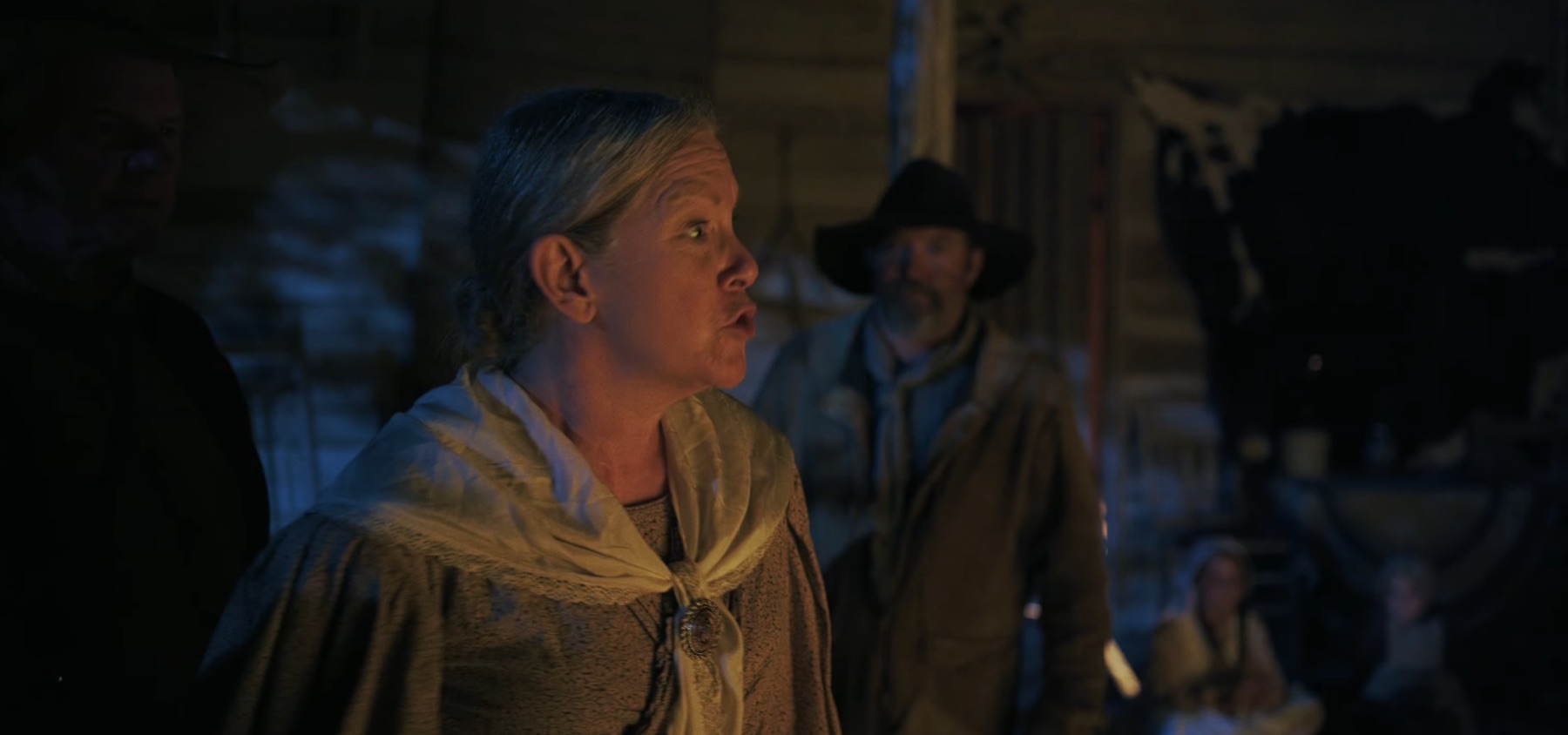
Di widow, mother, and colony matriarch whose steady resolve helped hold Gonzales together when di fight for Texas reached her doorstep.