San Antonio
The Saga
- Video art installation
- Created by Xavier de Richemont
- Projected on San Fernando Cathedral since June 2015
- Impressionistic, non-linear, and music-driven
- Downtown, a few blocks from the River Walk

Two Texas Buildings, Two Very Different Shows
A guide for curious travelers trying to understand what makes Gonzales different from San Antonio's famous projection mapping show.
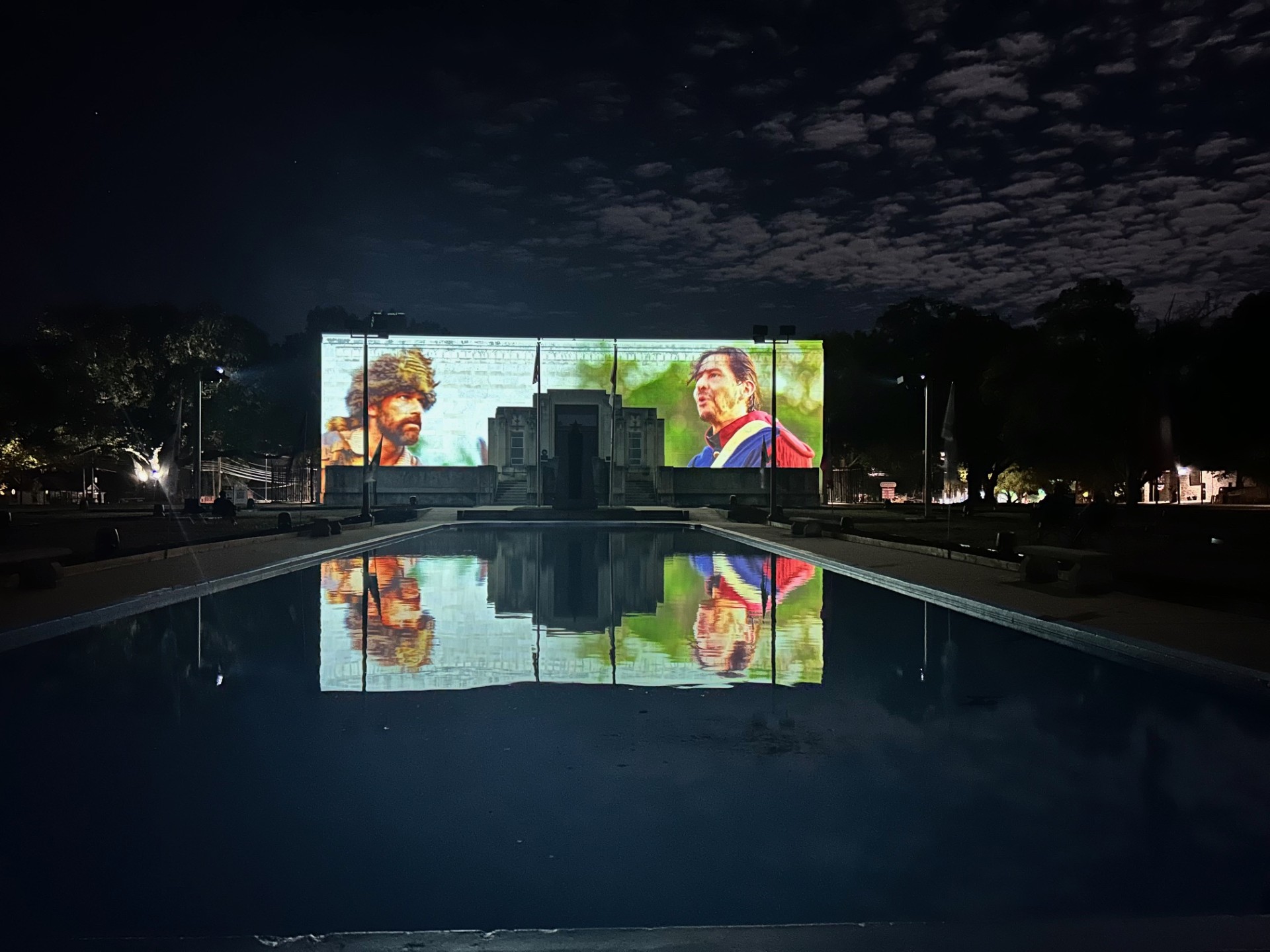
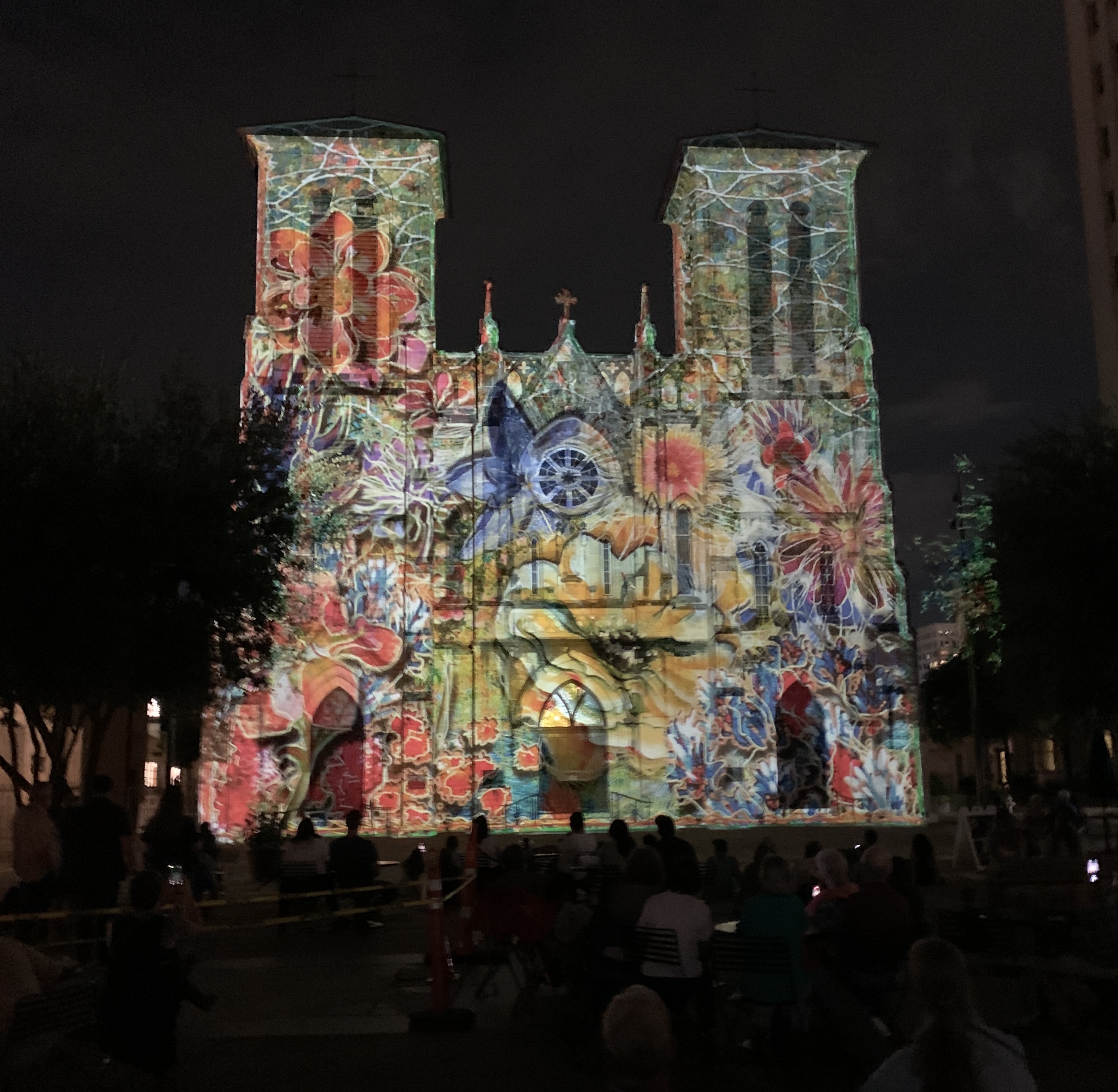
Most Texans who have heard of projection mapping in this state think of one thing: The Saga at San Fernando Cathedral in San Antonio. It is free, downtown, and genuinely worth seeing.
But Texas has another projection mapping experience now. It launched in 2025, was made right here by a Texan filmmaker, tells a story central to Texas history, and does something no other permanent projection mapping installation has done in quite this format.
San Antonio
Gonzales
Respect Where Respect Is Due
The San Fernando Cathedral is one of the most storied buildings in North America. Founded in 1731 by Spanish settlers, it stands at the heart of the city that became the capital of Spanish Texas.
The Saga, a 24-minute video art installation created by French artist Xavier de Richemont, has been projected onto its facade since June 2015. It tells the story of San Antonio and South Texas through sweeping animated imagery set to original music.
It is a beautiful piece of public art, and it has been a gift to San Antonio's tourism economy for a decade. But a decade is a long time in visual technology.
The Building
The San Fernando Cathedral is tall and Gothic, with twin towers reaching skyward over Main Plaza. It is an unmistakably dramatic canvas.
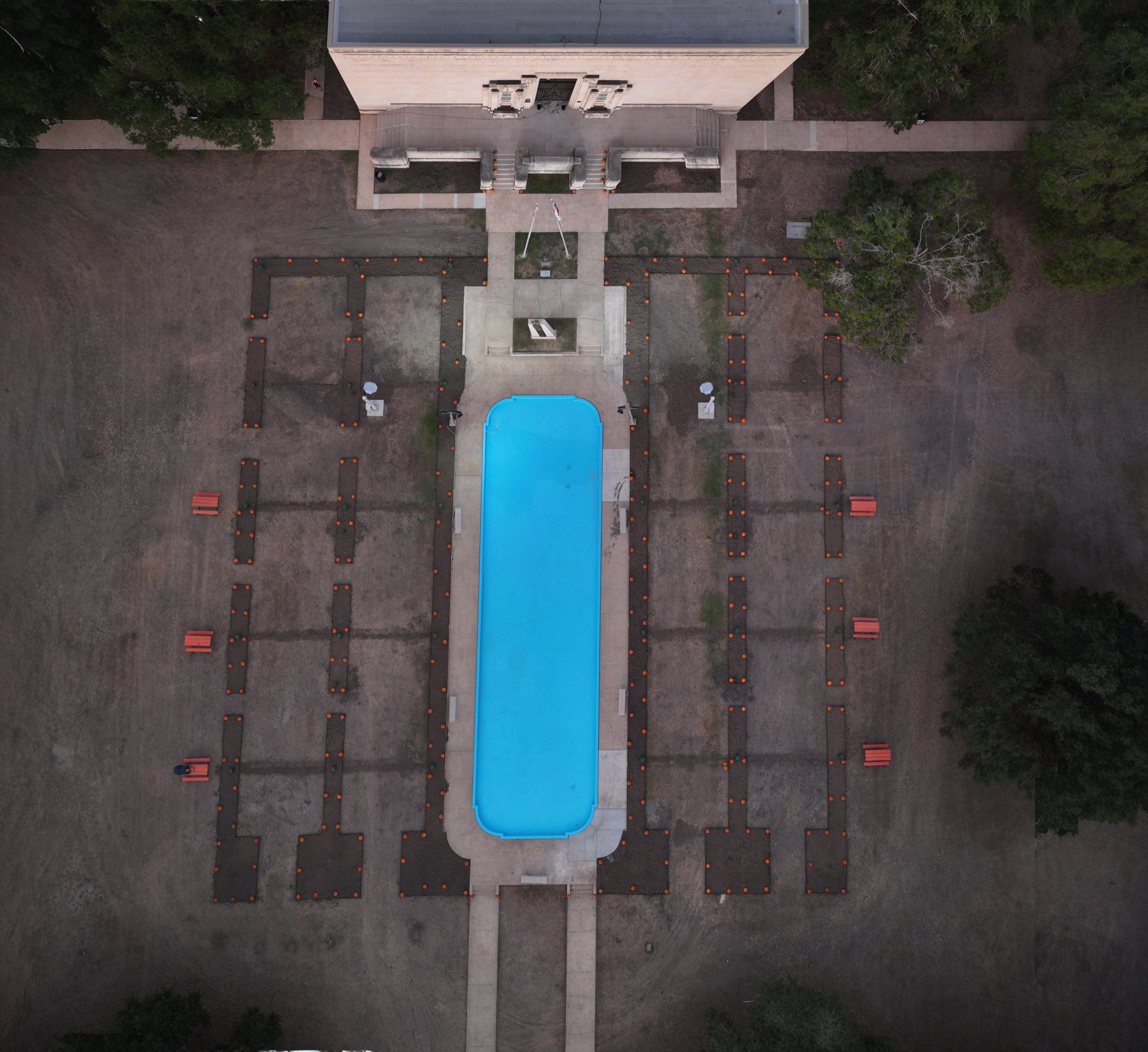
The Gonzales Memorial Museum is different. Built in 1936 of Texas shell stone and Cordova cream limestone, its 96-foot-wide facade is low, wide, and deeply symmetrical, with recessed entryways, bold relief work, and an iconic semi-circular archway at its center.
Where the Cathedral draws the eye upward, the Museum draws it outward. On the lawn, the full width of the building fills your peripheral vision. You are not watching a screen. You are standing inside the image.
The Technology Gap
The Saga was created in 2015 with the rendering capabilities and visual language of that moment. Texas Legacy in Lights was created in 2025.
In projection mapping, that ten-year gap matters. Processing power, rendering resolution, edge-blending precision, sound synchronization, and pyrotechnic integration have all moved forward.
When you watch Texas Legacy in Lights, you are watching what projection mapping can do right now, built with the visual and technical tools available to the medium in 2025.
The Form
The Saga is a video art installation. That is not a criticism. It is impressionistic, atmospheric, non-linear, and built from symbolic imagery and music.
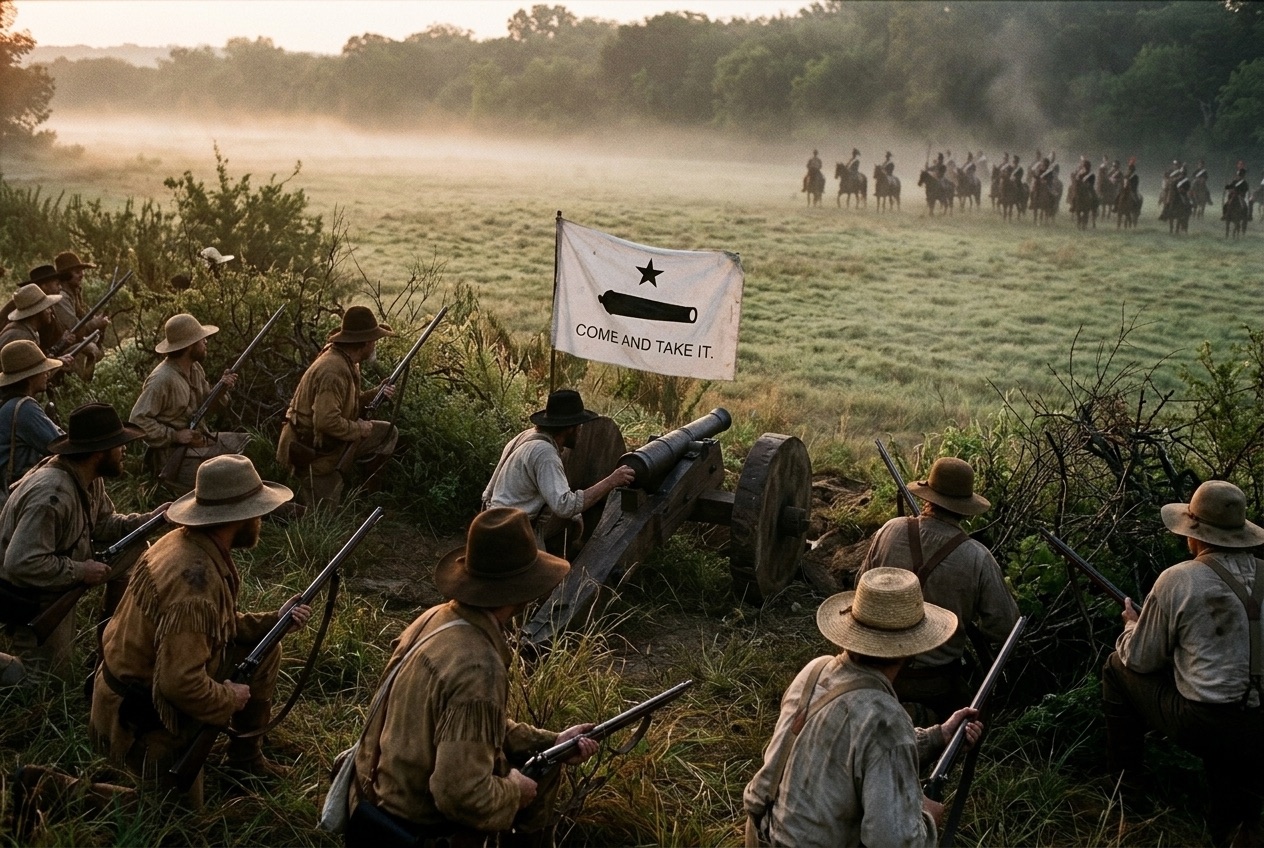
Texas Legacy in Lights is a narrative live-action film projection mapped onto a building. It was shot with real actors, on real locations, with a full production crew. It has a beginning, a middle, an end, characters you follow, and a climax built to the architecture.
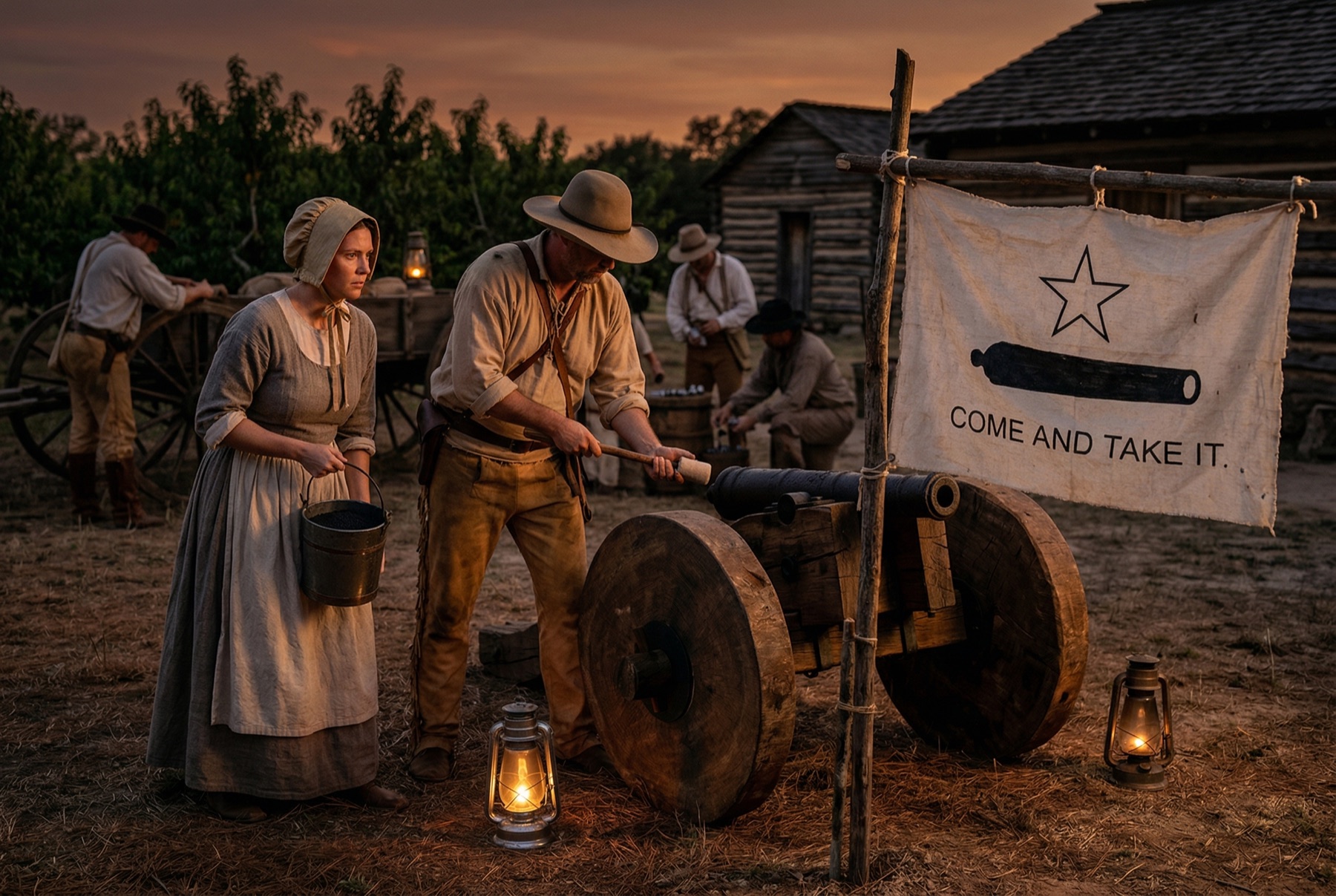
The cannon in the story becomes the architecture of the building. The fire in the story becomes actual flame effects projected onto stone. The first shot is not just illustrated. It lands.
The Story
On October 2, 1835, settlers in Gonzales refused to hand over a small cannon to Mexican Army forces. They raised a flag with the cannon and four words - Come and Take It - and stood their ground.
The shot fired that morning was the first shot of the Texas Revolution. Without Gonzales, there is no Battle of the Alamo. Without the Texas Revolution, there is no Republic of Texas. Without the Republic of Texas, there is no Texas.
The Gonzales Memorial Museum does not just tell the story. It stands on the site of the story, houses the cannon that started the Revolution, and becomes the surface where that history returns every night.